
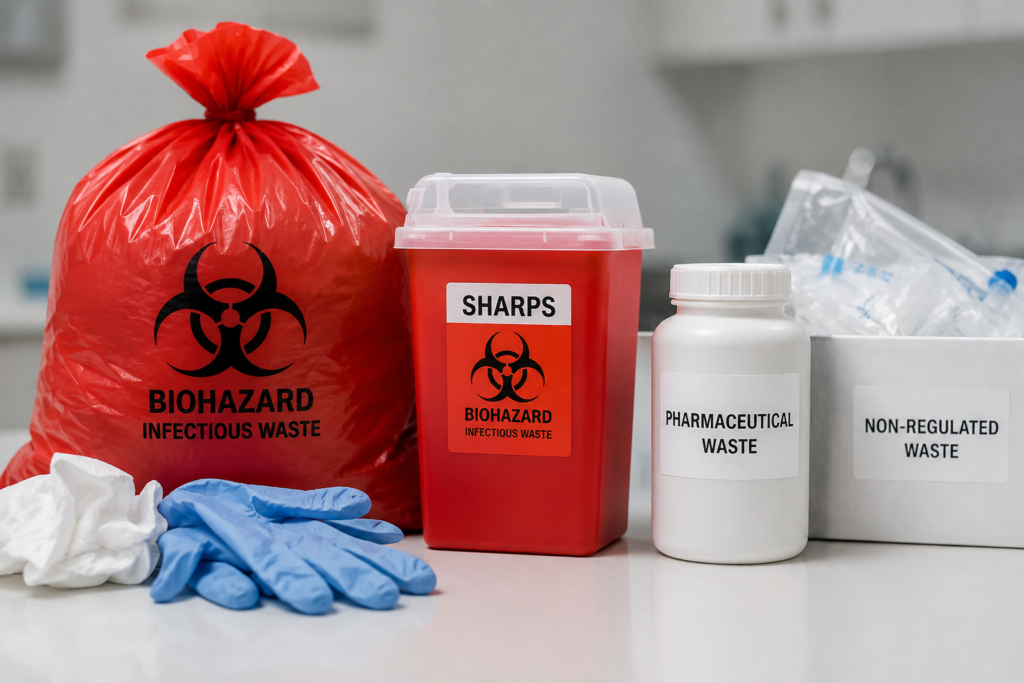
Biohazard waste is a type of medical waste, but where is the line between the two?
How does biohazard waste disposal differ?
Truth be told, this is one of the first and most confusing steps of proper disposal, but we’ll help you tell the difference.
The first time clinics and facilities start sorting their waste correctly, they tend to realize they’d been making mistakes all along. Spotting the difference between biohazard and medical waste trips up most people, and the terminology can be even trickier.
To hedge their bets, many people assume that if it comes from a patient encounter, it goes in the red bag. But combining all medical waste and leaving the details for the biohazard waste management companies to sort out isn’t right, either. Over-disposal could lead to overpayment, compliance issues, or even public safety risks.
All biohazard waste is medical waste, but not all medical waste is biohazardous. Learn the key differences to prevent regulatory missteps and handle biohazard trash disposal correctly.
What is Medical Waste?
Medical waste is an umbrella term. This includes any kind of waste generated during medical, dental, veterinary, laboratory, or research activities that are related to treatment or diagnosis. Not all of it is dangerous or infectious. Depending on the type, it may be highly regulated and require special handling, or it could just require sorting.
The primary categories of medical waste are:
Within those categories, you can find non-biohazard medical waste like:
- Medical equipment components, like empty IV bags
- Used PPE that didn’t come in direct contact with blood or fluids
- Break room waste and packaging, which can be discarded or recycled like regular trash
- Confidential materials and documents marked with PHI, which is treated as HIPPA waste
What is Biohazard Waste?
Biohazard waste is a subcategory of medical waste that, by definition, is known or reasonably expected to contain infectious agents or other potentially infectious materials (OPIM). In plain language, that means it’s any waste contaminated with blood, bodily fluids, or other materials could transmit disease. You may also see biohazard waste referred to as infectious waste, biomedical waste, regulated medical waste (RMW), and red bag waste. These terms aren’t exactly interchangeable, but they all point you in the right direction.
Examples of biohazard waste include:
- Contaminated PPE like gowns, gloves, or masks
- Gauze or dressings saturated with blood
- Cultures and stocks from laboratories
- Human or animal tissues and specimens
- Anatomical or pathological waste
Unless these items are sharps (which need to be handled separately) or contain a significant amount of liquid, biohazard waste belongs in red bags for safe disposal.
When Medical Waste Becomes Biohazardous
Here’s where it’s easiest to get mixed up. Aside from tissues and pathological waste which are clearly biohazardous from the get-go, the true difference between medical waste and biohazard isn’t what the item is, but what happened to it.
Consider a petri dish. Its sole purpose is to be exposed to microbes or infectious agents — that makes it biohazardous. However, if a clean petri dish becomes damaged and needs to be discarded without ever being used, it is not biohazard waste.
On the other hand, if a regular piece of office paper is somehow exposed to a quantity of bodily fluids, it then becomes biohazardous. It goes straight into the red bag for safe processing, even though it’s just a piece of paper.
Proper Biohazard Waste Disposal Starts with You
The CDC says that “the most practical approach to medical waste management is to identify wastes that represent a sufficient potential risk of causing infection during handling and disposal and for which some precautions likely are prudent.” In other words, use your best judgment.
When you take the time to sort medical vs biohazard waste thoughtfully, you’re handling it safely, compliantly, and cost-effectively. After that, Keystone Med Waste can help you maintain your compliance with guaranteed regulatory compliance and full tracking and documentation. To improve your process even further, we’ve invested in steam treatment integrators (STIs) as a more sustainable alternative to autoclaves and incineration. This way, your biohazard trash disposal is more environmentally friendly while still meeting or exceeding regulatory standards.
Learn more about our environmentally friendly biohazard waste disposal process or contact Keystone for a quote.
This material is provided for general informational purposes only and does not constitute legal, regulatory, or compliance advice.
Compliance requirements for medical and hazardous waste management vary by jurisdiction and are subject to change.
Each facility is responsible for independently verifying and complying with all applicable laws and regulations.
Keystone Med Waste Solutions assumes no liability for reliance on this information.