
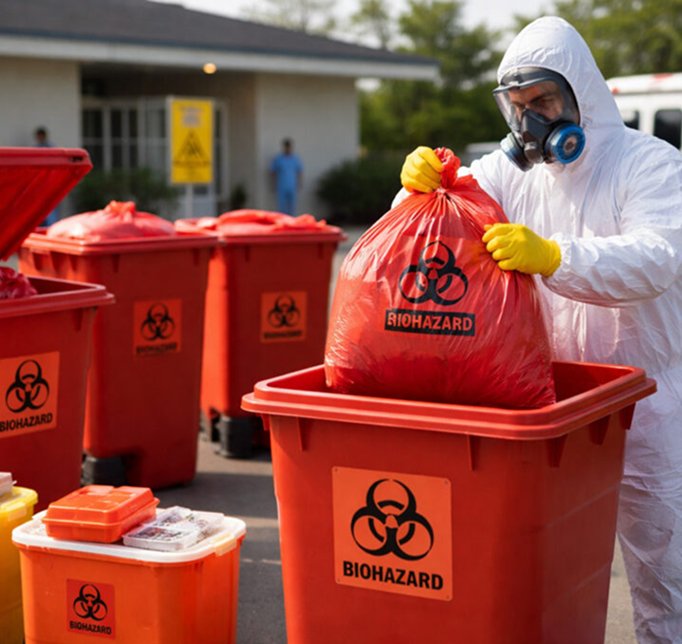
Biohazard waste isn’t just red bags. Learn how to sort biohazard waste, what qualifies as regulated waste,
and why proper medical waste disposal matters.
When most people think of medical waste, they picture red bags. They’re not wrong, but that’s just one sub-category of medical waste. Biohazard waste includes both sharps and red bag waste, but it can be further broken down into specific types. Learn how to recognize biohazards so you can handle all types of medical waste disposal efficiently, safely, and compliantly.
What Makes Waste Biohazardous?
By definition, biohazard waste is any material that is known or reasonably expected to contain infectious agents or other potentially infectious materials (OPIM). In plain terms, it’s anything that has been (or could have been) contaminated with blood or bodily fluids.
You may also know biohazard waste as biomedical waste, infectious waste, or regulated medical waste (RMW). These terms aren’t exactly synonymous, but they all describe medical waste that could have risks to human safety.
Mishandling biohazard waste obviously increases the odds of spreading pathogens or getting an injury from needlesticks or sharps, but it also increases your legal and compliance risks. That’s why it has very specific handling, disposal, and transportation rules. The first step is to identify biohazard waste correctly.
Common Examples of Biohazard Waste
Sharps
Sharps include needles, syringes, scalpels, dental wire, and other sharp objects. Even if they’re not visibly contaminated, sharps are always regulated and must be disposed of in approved, puncture-resistant sharps containers. They should never go in red bags or regular trash.
Contaminated PPE
Gloves, gowns, and masks become biohazard waste once they’ve been exposed to blood or bodily fluids. This includes tattoo and med spa use. On the other hand, clean or unused PPE can be disposed of as regular trash.
Blood and Blood-Soaked Materials
Blood bags, tubing, gauze, sponges, or dressings that are saturated with blood or OPIM are considered biohazardous and must be disposed of accordingly.
Pathological Waste
Human tissues, organs, anatomical waste, and specimens removed during medical procedures are inherently biohazardous. They require special handling for compliance, safety, and respect for the patients.
Animal Anatomical Waste
Veterinary clinics generate biohazard waste, too, and it’s treated very similarly to human biohazard waste. Medical garbage disposal regulations apply to animal specimens, lab materials, carcasses, blood, tissues, sharps, etc.
Laboratory Waste
In an educational or research setting, biohazard waste could be cultures, stocks of infectious agents, lab tools, or disposable materials used during testing or analysis. These facilities may not be medical clinics, but they still generate medical waste.
What is NOT Biohazard Waste?
Not every piece of trash from a medical setting becomes biohazardous. Putting regular trash into regulated containers “just to be safe” is one of the most common disposal mistakes.
For example, a cardboard box of exam gloves is not biohazardous. It’s regular trash because it’s not dangerous and it doesn’t have any patient health information (PHI). Since it’s cardboard, it’s probably even recyclable. If the gloves are unworn or only used for non-patient care tasks, they would be regular trash, too. Once they’re worn and exposed to blood or OPIM, then the gloves become biohazard waste.
How to Handle Biohazard Waste Correctly
The trick is to pay attention to what happens to the waste, not just what it is. Most importantly, understand that proper handling isn’t limited to hospitals. Essentially, if anyone in your facility uses sharps or handles materials exposed to blood or bodily fluids, biohazard waste rules apply. However, only staff who are trained in compliance should ever handle medical waste.
A few best practices go a long way:
- Dispose of sharps immediately in approved sharps containers
- Use red bags only for contaminated biohazard waste
- Never place regulated waste in regular trash or recycling
- Clearly label containers and don’t allow them to overflow
Still not sure how your medical waste should be sorted? Contact us at Keystone for guidance.